Macron Sounds Alarm on Russia's Stealthy Hybrid Threat Across Europe
In a resolute stance, French President Emmanuel Macron has reaffirmed his country's unwavering commitment to supporting Ukraine amidst escalating tensions. Despite mounting threats, Macron vowed that France would not tolerate attacks linked to Russia, making it clear that such aggression would meet a firm response. This bold declaration comes as
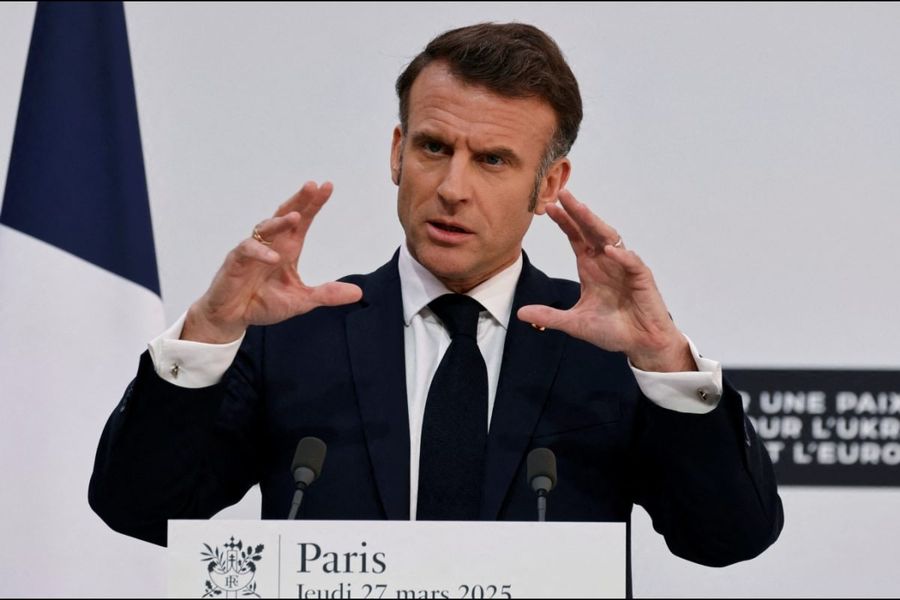
In the dead of night, a chilling silence descended upon the streets of Paris, the City of Light, as a cryptic message from the Elysée Palace sent shockwaves across Europe. French President Emmanuel Macron, the country's unyielding leader, stood tall, his voice firm and resolute, as he sounded the alarm on a stealthy, hybrid threat emanating from Russia's shadowy depths. It was a clarion call that would reverberate across the continent, echoing through the corridors of power, and into the hearts of citizens, leaving no one untouched. The message was clear: Russia's insidious influence had reached a critical juncture, and France would not stand idly by.
Macron's declaration was not a sudden, impulsive reaction to the rising tensions. Rather, it was the culmination of months, if not years, of careful deliberation, fueled by a deep understanding of the complexities of the situation. The French President had been a steadfast supporter of Ukraine, ever since the outbreak of the conflict in 2014. He had consistently maintained a firm stance against Russia's aggressive actions, refusing to acknowledge Moscow's annexation of Crimea as legitimate. His unwavering commitment to Ukraine's sovereignty had earned him the respect of the international community, and the admiration of the Ukrainian people.
But Macron's resolve was not just driven by a sense of duty or a desire to assert France's influence on the global stage. It was also deeply personal. As a historian and a scholar of European integration, Macron had a profound understanding of the continent's fragile history. He knew that the scars of the past, the memories of wars, and the lessons of history, were still raw and tender. He saw the threat from Russia as a direct challenge to the very fabric of European unity, and to the principles of democracy, freedom, and human rights that had been fought for and won.
Macron's warning was not just directed at Russia, but also at the European Union, which he felt had been too slow to respond to the threat. He knew that the EU's collective response to Russia's aggression had been fragmented, and that the member states had failed to present a united front. He saw the EU's weakness as an opportunity for Russia to exploit, and to further its own interests. By sounding the alarm, Macron was not just trying to alert the EU to the danger, but also to galvanize it into action.
The timing of Macron's declaration was not coincidental. It came on the heels of a series of high-profile diplomatic meetings between European leaders, during which the issue of Russia's aggression had been discussed at length. The meetings had been tense, with some leaders pushing for a more conciliatory approach, while others demanded a firmer stance. Macron's declaration was a clear signal that France would not be swayed by pressure from Moscow, or by the temptation to seek a quick fix.
As the news of Macron's statement spread, it sent shockwaves across the continent. In Ukraine, the news was met with widespread relief, and gratitude. The Ukrainian President, Volodymyr Zelensky, hailed Macron's declaration as a major victory, and a significant boost to Ukraine's morale. In Russia, the reaction was more muted, with some officials dismissing Macron's statement as "sensationalist rhetoric." But beneath the surface, there was a growing sense of unease, as Russia's leadership realized that the situation was spiraling out of control.
Also Read
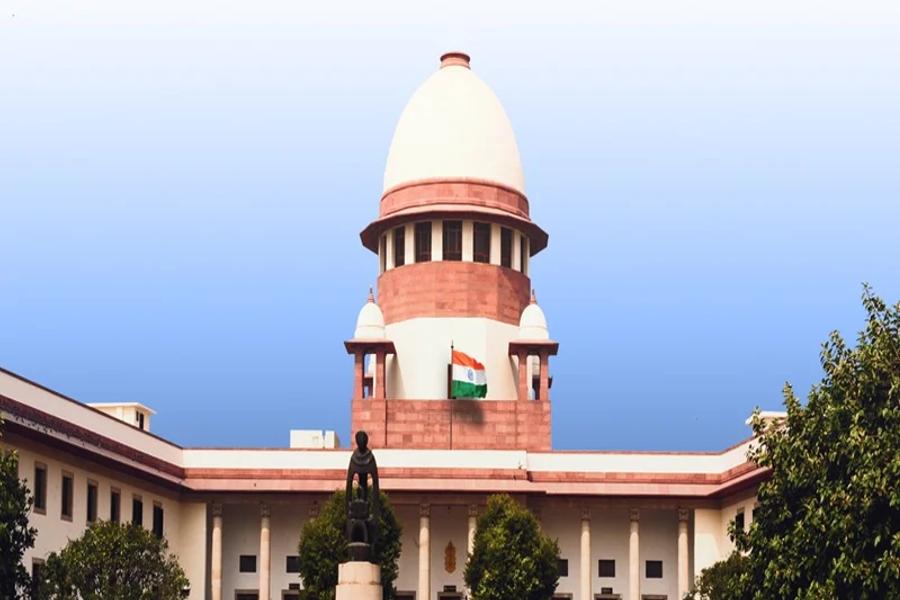
मणिपुर राहत शिविरों की स्थिति पर सुप्रीम कोर्ट का चौंकाने वाला बयान
मणिपुर में हिंसा के कारण शरणार्थी शिविरों में रहने वाले आंतरिक रूप से विस्थापित लोगों में होने वाली मौतों के मामले में सुप्रीम कोर्ट ने गंभीर चिंता व्यक्त की है। सुप्रीम कोर्ट ने 17 सितंबर 2026 को एक सुनवाई के दौरान मणिपुर सरकार को निर्देशित किया कि वह इन मौतों
Macron's declaration marked a turning point in the EU's response to Russia's aggression. It was a wake-up call, a clarion call to action, and a reminder that the EU's collective security was at stake. The French President's bold stance sparked a wave of reactions across the continent, as leaders and experts weighed in on the implications of his statement.
One of the first reactions came from the EU's High Representative for Foreign Affairs and Security Policy, Josep Borrell. Borrell welcomed Macron's declaration, and hailed it as a significant step forward in the EU's efforts to counter Russia's aggression. He acknowledged that the EU had been too slow to respond, and that Macron's statement had brought much-needed momentum to the debate.
But not everyone was pleased with Macron's declaration. Some EU leaders, who had been pushing for a more conciliatory approach, felt that Macron's statement was too bold, and that it risked escalating tensions. They argued that the EU should focus on finding a negotiated solution, rather than resorting to rhetoric.
Macron's declaration also sparked a lively debate among experts, who weighed in on the implications of his statement. Some argued that the EU had been too soft on Russia, and that Macron's declaration marked a welcome shift towards a more robust approach. Others warned that Macron's statement risked creating a new Cold War, and that it would be difficult to turn back the clock once the genie was out of the bottle.
As the debate raged on, the impact of Macron's declaration began to manifest in the real world. In Ukraine, there was a surge in morale, as the news of Macron's statement spread. The Ukrainian military, which had been struggling to cope with the influx of Russian troops, received a much-needed boost, as French military aid began to flow in. In Russia, there was a growing sense of unease, as the Kremlin realized that the situation was spiraling out of control.
The implications of Macron's declaration went beyond the immediate crisis in Ukraine. It marked a significant shift in the EU's approach to Russia, and a recognition that the continent's collective security was at stake. It was a wake-up call, a reminder that the EU's unity and cohesion were essential to countering Russia's aggression.
As the dust settles, and the debate continues, one thing is clear: Macron's declaration has marked a turning point in the EU's response to Russia's aggression. It is a bold statement, a clarion call to action, and a reminder that the EU's collective security is at stake. Whether it will prove to be a turning point in the conflict, only time will tell. But one thing is certain: Macron's declaration has sent shockwaves across the continent, and will be remembered for a long time to come.
The future is uncertain, but one thing is clear: the stakes are high, and the consequences of failure are dire. The EU must act, and act quickly, to counter Russia's aggression, and to protect its collective security. Macron's declaration has marked a turning point, but it is just the beginning of a long and difficult journey. The EU must now put its words into action, and take concrete steps to counter Russia's aggression. The clock is ticking, and the world is watching.