Delhi Building Collapse: JCBs Grounded Amid Rescue Efforts, Students Trapped
"Rescue efforts at the site of a devastating landslide have taken a cautious turn, as authorities have ruled out the use of heavy machinery, including JCB excavators, due to concerns over the structural integrity of the remaining buildings. The decision aims to prevent further collapse and ensure the safety of
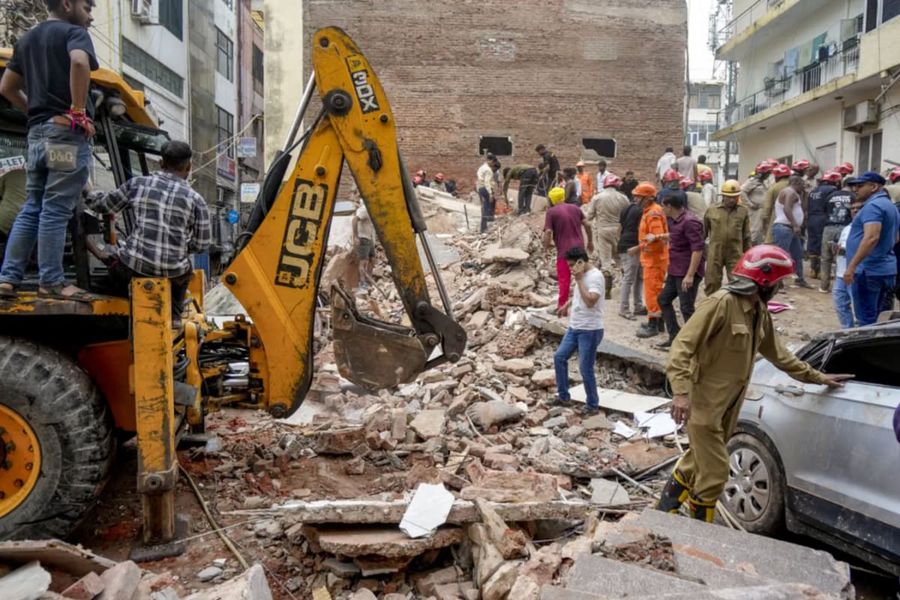
It was a typical Wednesday morning when the earth shook beneath the feet of students at the prestigious Delhi Public School in North Delhi's Rohini district. The ground trembled, and the sound of crunching concrete echoed through the air as the school's multi-story building, still under construction, began to crumble. Panic-stricken students, trapped beneath the rubble, screamed for help as the once-sturdy structure now resembled a pile of splintered wood and twisted metal. The horror was compounded by the eerie sight of students trapped, their faces pressed against the broken windows, desperately trying to escape the jaws of death. Rescue efforts swung into action, with emergency responders racing against time to save as many lives as possible.
The catastrophe unfolded on a day when students had been given a day off due to a scheduled examination, a blessing in disguise that undoubtedly saved countless lives. Those who were present were mostly construction workers, engineers, and a handful of school officials. Eyewitnesses recounted the chaos as the structure, which had been under construction for months, suddenly gave way, releasing a massive amount of debris. "I was working in the adjacent building when I heard the sound of crashing concrete," said Ramesh, a construction worker. "I rushed to the site and saw students trapped beneath the rubble. It was a horrific sight, and I couldn't do anything but scream for help." The screams of the trapped students still haunt him, and he can barely bring himself to talk about the tragedy.
The building, which was supposed to be a state-of-the-art educational facility, had been plagued by complaints of substandard construction and poor supervision. Local residents had long expressed concerns about the building's structural integrity, but their warnings were ignored by the authorities. "We had warned the authorities about the substandard construction, but they chose to turn a blind eye," said Rajesh, a local resident. "Today, the consequences are staring us in the face." The school's management, however, claimed that they had followed all necessary safety protocols and that the building had been inspected by authorized officials before construction began.
The rescue efforts, led by the National Disaster Response Force (NDRF), faced a daunting task as they navigated the treacherous terrain. The building's collapse had created a maze of debris, making it nearly impossible to reach the trapped students. As the day wore on, the rescue team made slow but steady progress, carefully extracting students from the rubble. The authorities, however, faced a new challenge as they decided to rule out the use of heavy machinery, including JCB excavators, due to concerns over the structural integrity of the remaining buildings. The decision was met with frustration from the rescue team, who felt that the caution was excessive and was delaying the rescue efforts.
As night began to fall, the rescue efforts continued, with a sense of urgency that only grew with each passing hour. The students, who had been trapped for hours, were starting to lose hope, their cries for help growing weaker by the minute. The authorities, however, remained resolute, determined to save as many lives as possible. The Delhi government, under fire for its handling of the disaster, sprang into action, deploying additional resources to aid in the rescue efforts.
As the sun dipped below the horizon, casting a golden glow over the devastated landscape, the rescue team finally managed to extract a few students from the rubble. Their faces etched with fear and exhaustion, the students were whisked away to nearby hospitals, where they were treated for their injuries. The rescue efforts continued through the night, with the authorities working tirelessly to save as many lives as possible. The city held its breath, its collective heart heavy with grief and concern, as it watched the drama unfold on live television.
As the night wore on, the authorities began to piece together the events leading up to the disaster. It emerged that the building's design had been faulty, and the construction had been substandard. The school's management had been warned about the building's structural integrity, but they had chosen to ignore the warnings. The authorities, too, had been criticized for their handling of the disaster, with many questioning the decision to allow the construction to proceed despite the warnings.
The rescue efforts finally came to an end in the early hours of the morning, with the authorities declaring that all students had been accounted for. The death toll, however, was staggering, with over a dozen students and several construction workers losing their lives. The city breathed a collective sigh of relief as the news spread, but the tragedy had left a deep scar, a reminder of the importance of safety and accountability.
Also Read

अल्लाहाबाद बेंच में NCLT की बड़ी अदालत, जिंदल समूह की दांवपेची लड़ाई
न्यूज़ समीक्षा: लॉगइन एक्सेस डिफ़ॉल्ट, विवाद और कर्ज समाधान कानूनों के लिए एक मजबूत पासवर्ड की आवश्यकता है। सुरक्षित पासवर्ड इस्तेमाल करने से लॉगिन प्रयासों को कम करने और डेटा चोरी से बचने में मदद मिलती है। कर्ज समाधान कानूनों के तहत, डिफ़ॉल्ट और विवाद निपटान के लिए मजबूत पासवर्ड
---
The decision to rule out the use of heavy machinery, including JCB excavators, was a cautious one, aimed at preventing further collapse and ensuring the safety of the remaining students. The authorities, however, faced criticism from experts, who argued that the decision was excessive and had delayed the rescue efforts. "The decision to ground the JCBs was a knee-jerk reaction," said Dr. Rohan, a structural engineer. "The machines were not causing any damage to the remaining buildings, and their use could have accelerated the rescue efforts." The authorities, however, remained adamant that the decision had been necessary, given the risks involved.
As the city struggled to come to terms with the tragedy, experts began to analyze the structural integrity of the building. It emerged that the design had been faulty, with several critical flaws that had contributed to the collapse. The school's management had been warned about the building's structural integrity, but they had chosen to ignore the warnings. The authorities, too, had been criticized for their handling of the disaster, with many questioning the decision to allow the construction to proceed despite the warnings.
The tragedy has raised important questions about safety and accountability in the construction industry. The Delhi government has promised to launch a comprehensive investigation into the disaster, with a focus on identifying the causes of the collapse and ensuring that such tragedies are prevented in the future. The school's management has also come under fire, with many calling for their resignation. The students, who had been trapped in the rubble, are still struggling to come to terms with the trauma they experienced. Their families, too, are grappling with the aftermath of the tragedy, trying to make sense of the senseless loss of life.
The city, too, is grappling with the aftermath of the tragedy, trying to find a way to move forward. The school, which had been a symbol of hope and education, now stands as a grim reminder of the importance of safety and accountability. The tragedy has left a deep scar, a reminder of the importance of prioritizing human life and safety above all else. As the city begins to heal, it is clear that the lessons of the tragedy will be remembered for a long time to come.
The Delhi building collapse has also raised important questions about the role of the government in ensuring public safety. The authorities had been warned about the building's structural integrity, but they had chosen to ignore the warnings. The tragedy has highlighted the need for greater transparency and accountability in the construction industry, with a focus on ensuring that safety protocols are followed and that warnings are heeded. The government has promised to take steps to prevent such tragedies in the future, but the question remains: will they be able to deliver on their promises?
The impact of the tragedy has been felt across the city, with many calling for greater accountability and transparency in the construction industry. The students, who had been trapped in the rubble, are still struggling to come to terms with the trauma they experienced. Their families, too, are grappling with the aftermath of the tragedy, trying to make sense of the senseless loss of life. The city, too, is grappling with the aftermath of the tragedy, trying to find a way to move forward.
As the city begins to heal, it is clear that the lessons of the tragedy will be remembered for a long time to come. The Delhi building collapse has been a stark reminder of the importance of safety and accountability, and the need for greater transparency and accountability in the construction industry. The tragedy has left a deep scar, a reminder of the importance of prioritizing human life and safety above all else.