UPI Overtakes Cards in Merchant Payments, Is the Writing on the Wall for Debit/Credit Cards?
"India's Unified Payments Interface (UPI) has taken a commanding lead in merchant payments, potentially rendering cards less relevant in the digital age. With UPI's widespread adoption, the Reserve Bank of India is now grappling with new responsibilities to ensure seamless transactions. Experts stress the need for the fintech ecosystem to

As the sun set over the bustling streets of India, a quiet revolution was unfolding. Behind the scenes, a silent shift was taking place, one that would forever alter the landscape of merchant payments in the country. The humble Unified Payments Interface (UPI), once an obscure innovation, had burst onto the scene, quietly supplanting its more established counterpart, the trusty debit/credit card. It was a development that had sent shockwaves through the financial sector, leaving even the most seasoned experts scrambling to keep pace.
At the forefront of this seismic shift was the Reserve Bank of India (RBI), the country's central bank, which had long been a stalwart supporter of the UPI. Launched in 2016, the UPI had been designed to simplify digital transactions by allowing users to link multiple bank accounts to a single mobile application. But it was only after the pandemic struck that the UPI truly began to gain traction, as the government rolled out a series of stimulus packages to encourage digital payments. And gain traction it did, with the UPI's user base swelling to over 300 million in a matter of months.
As the UPI's popularity soared, the RBI found itself at the epicenter of a new wave of challenges. With the UPI now accounting for the majority of merchant transactions, the central bank was faced with the daunting task of ensuring seamless transactions. Gone were the days of cash-based transactions, or even the familiar swipe-and-pay convenience of cards. The UPI, with its complex network of bank accounts and payment gateways, presented a whole new set of logistical headaches.
But the RBI was not the only one struggling to keep pace. Debit/credit card companies, who had long been the dominant players in the merchant payments space, were finding themselves increasingly marginalized. As the UPI's market share continued to grow, the cards' share began to dwindle, leaving them scrambling to adapt to the changing landscape. It was a stark reminder that even the most established players can be left behind in the face of innovation.
For many experts, the writing was on the wall. The UPI's dominance was not just a fleeting trend, but a harbinger of a broader shift in the way people made payments. "The UPI is not just a payment method, it's a ecosystem," said Rohan Kaul, a leading fintech expert. "It's a platform that allows for seamless transactions, and it's going to change the way we think about payments forever."
But as the UPI continued to gain momentum, concerns began to emerge about the potential risks of such a centralized system. With so many users relying on the UPI for their daily transactions, the possibility of system failures or cyber attacks became increasingly real. It was a risk that the RBI was keenly aware of, and one that it was working tirelessly to mitigate.
As the battle for dominance in the merchant payments space continued to rage, one thing was clear: the UPI was here to stay. And with its widespread adoption, the RBI was left with a daunting task: to ensure that the system remained seamless, secure, and efficient. The stakes were high, but one thing was certain: the future of payments in India was about to change forever.
The RBI, aware of the challenges ahead, had begun to take proactive steps to address the issue. It had set up a special task force to monitor the UPI's performance, and had also established a system of real-time alerts to ensure that any issues were quickly identified and addressed. But despite these efforts, concerns about the UPI's stability continued to linger.
In the midst of this uncertainty, the debit/credit card companies found themselves facing an existential crisis. With their market share dwindling, they were forced to re-examine their business models and adapt to the changing landscape. It was a painful process, but one that they knew was necessary if they were to survive in a world dominated by the UPI.
As the dust began to settle, one thing became clear: the UPI was not just a payment method, but a revolution in the making. And with its widespread adoption, the RBI was faced with a daunting task: to ensure that the system remained seamless, secure, and efficient. The stakes were high, but one thing was certain: the future of payments in India was about to change forever.
The UPI's impact was not limited to the financial sector alone. As more and more businesses began to adopt the UPI, the economy as a whole began to feel the effects. Small businesses, in particular, were finding it easier to operate, thanks to the reduced transaction costs and increased accessibility of the UPI.
But as the UPI continued to gain traction, concerns about its long-term sustainability began to emerge. With the RBI's role as the central bank, there were questions about the potential risks of a centralized system. What if the system failed? What if there were widespread cyber attacks? The RBI was working to address these concerns, but the questions lingered.
The RBI's efforts to ensure the UPI's stability were being closely watched by experts. While some praised the central bank's proactive approach, others were more skeptical. The debate was far from over, but one thing was certain: the future of payments in India was about to change forever.
As the battle for dominance in the merchant payments space continued to rage, one thing was clear: the UPI was here to stay. And with its widespread adoption, the RBI was left with a daunting task: to ensure that the system remained seamless, secure, and efficient.
Also Read
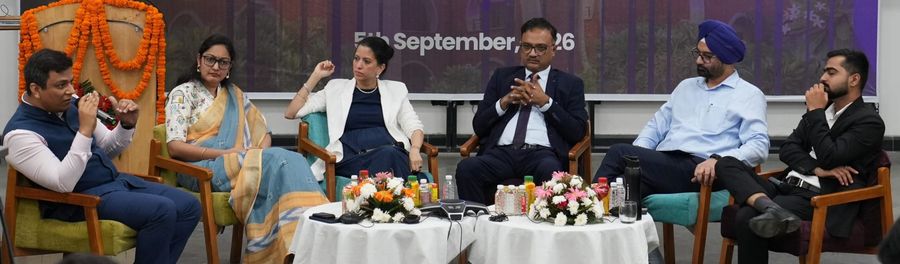
आईआईएम काशीपुर में 'नवयुग 2026' सम्मेलन, एआई एकीकरण के नए ढांचे का अनावरण
काशीपुर में आयोजित आईआईएम काशीपुर के सेक्टर कॉन्क्लेव 'नवयुग 2026: बैंकिंग, वित्तीय सेवाएं और बीमा' में बैंकिंग, वित्तीय सेवाएं और बीमा के क्षेत्र के नवीनतम विकास पर चर्चा की गई। इस उच्च-स्तरीय कॉन्क्लेव में ब्रांडेड सीईओ, जोखिम रणनीतिकार, एचआर नेता और शैक्षिक विशेषज्ञ शामिल हुए।
---
The RBI's role in the UPI's rise to dominance was not limited to just ensuring stability. The central bank had also been actively promoting the UPI, working closely with fintech companies to develop the ecosystem. It was a delicate balancing act, one that required the RBI to stay ahead of the curve while also ensuring that the UPI remained secure and efficient.
But the RBI's efforts were not without controversy. Some critics argued that the central bank was over-relying on the UPI, and that the risks of a centralized system were being ignored. Others pointed out that the RBI's promotion of the UPI was creating an uneven playing field, where smaller fintech companies were being squeezed out.
Despite these criticisms, the RBI remained committed to the UPI. The central bank saw the UPI as a game-changer, one that had the potential to transform the way people made payments. And with its widespread adoption, the RBI was convinced that the UPI was the future of payments in India.
The UPI's impact on the debit/credit card companies was being closely watched by experts. While some argued that the cards would eventually adapt to the changing landscape, others were more pessimistic. The cards had been the dominant players in the merchant payments space for decades, but with the UPI's rise, their market share was dwindling.
As the UPI continued to gain traction, concerns about its long-term sustainability began to emerge. With the RBI's role as the central bank, there were questions about the potential risks of a centralized system. What if the system failed? What if there were widespread cyber attacks? The RBI was working to address these concerns, but the questions lingered.
The RBI's efforts to ensure the UPI's stability were being closely watched by experts. While some praised the central bank's proactive approach, others were more skeptical. The debate was far from over, but one thing was certain: the future of payments in India was about to change forever.
As the battle for dominance in the merchant payments space continued to rage, one thing was clear: the UPI was here to stay. And with its widespread adoption, the RBI was left with a daunting task: to ensure that the system remained seamless, secure, and efficient.
The UPI's impact on the economy was being closely watched by experts. While some argued that the UPI was creating new opportunities for businesses, others were more skeptical. The UPI's reduced transaction costs and increased accessibility were certainly benefits, but what about the potential risks?
The RBI's efforts to address these concerns were being closely watched by experts. While some praised the central bank's proactive approach, others were more skeptical. The debate was far from over, but one thing was certain: the future of payments in India was about to change forever.
As the dust began to settle, one thing became clear: the UPI was not just a payment method, but a revolution in the making. And with its widespread adoption, the RBI was faced with a daunting task: to ensure that the system remained seamless, secure, and efficient. The stakes were high, but one thing was certain: the future of payments in India was about to change forever.
The RBI's role in the UPI's rise to dominance was not limited to just ensuring stability. The central bank had also been actively promoting the UPI, working closely with fintech companies to develop the ecosystem. It was a delicate balancing act, one that required the RBI to stay ahead of the curve while also ensuring that the UPI remained secure and efficient.
But the RBI's efforts were not without controversy. Some critics argued that the central bank was over-relying on the UPI, and that the risks of a centralized system were being ignored. Others pointed out that the RBI's promotion of the UPI was creating an uneven playing field, where smaller fintech companies were being squeezed out.
Despite these criticisms, the RBI remained committed to the UPI. The central bank saw the UPI as a game-changer, one that had the potential to transform the way people made payments. And with its widespread adoption, the RBI was convinced that the UPI was the future of payments in India.