Nepal's Flash Floods: Was Climate Change or China's Dam the Culprit?
A devastating flood in Nepal's Solu-Khumbu region has left dozens dead and hundreds missing. The cause of the disaster is attributed to the collapse of a glacial lake dam, also known as a glacial lake outburst flood (GLOF), which is a natural phenomenon. This type of event can be triggered
Nepal's Flash Floods: Was Climate Change or China's Dam the Culprit?
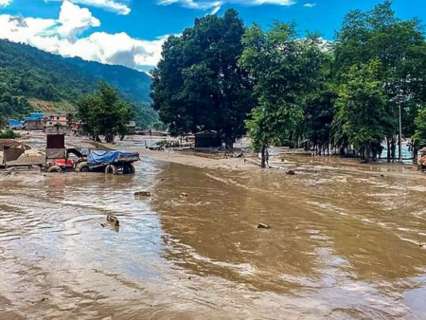
A devastating flash flood in Nepal's Solu-Khumbu region has left dozens dead and hundreds missing, leaving the nation in a state of shock and grief. The remote region, known for its breathtaking Himalayan landscapes and trekking trails, was hit by the disaster on August 15, when a glacial lake dam collapsed, triggering a massive flood that swept through the valleys and villages below. The cause of the disaster has been attributed to a glacial lake outburst flood (GLOF), a natural phenomenon that can be triggered by a variety of factors, including climate change and human activities.
While climate change is often cited as a major contributor to GLOFs, some experts believe that China's construction of dams in the upper reaches of the Yarlung Tsangpo River, which flows through Tibet and Nepal, may have played a role in the disaster. The dams, which were built to generate hydroelectric power, have been accused of altering the natural flow of the river and increasing the risk of GLOFs. "The dams have disrupted the natural balance of the river system, and it's only a matter of time before we see more disasters like this," said Dr. Pradeep Shrestha, a glaciologist at Tribhuvan University. "We need to take a closer look at the impact of these dams on the environment and take steps to mitigate the risks."
The Solu-Khumbu region is particularly vulnerable to GLOFs due to its unique geography. The region is home to numerous glacial lakes, which are formed when melting glaciers create depressions in the rock. These lakes can be unstable and prone to collapse, especially during the monsoon season when heavy rainfall and snowmelt can put pressure on the lake's walls. In recent years, Nepal has experienced a number of GLOFs, including a devastating flood in 2014 that killed over 40 people.
The Nepal government has launched an investigation into the cause of the disaster, and experts are working to assess the damage and identify the root causes of the flood. The government has also announced plans to improve disaster preparedness and response in the region, including the construction of early warning systems and emergency shelters. However, many experts believe that more needs to be done to address the underlying causes of the disaster, including climate change and the impact of human activities on the environment.
As the nation mourns the loss of life and property, the people of Solu-Khumbu are already looking to the future. The region is known for its resilience and determination, and many are calling for greater investment in disaster preparedness and environmental protection. "We need to take care of our environment, not just for ourselves but for future generations," said a local resident. "We can't afford to wait until it's too late."
As the investigation into the cause of the disaster continues, one thing is clear: Nepal's Solu-Khumbu region will never be the same again. The devastating flash flood has left a lasting impact on the community, and it will take time, effort, and resources to rebuild and recover.