India Conducts Secret Test of K-4 Missile, Capable of Reaching Pakistan and Parts of China
On December 23, 2025, India conducted a submarine-launched ballistic missile test in the Bay of Bengal, reportedly involving the nuclear-capable K-4 missile, which has a range of approximately 3,500 km. The missile was launched from an Arihant-class submarine, enhancing India's sea-based nuclear deterrent capabilities.
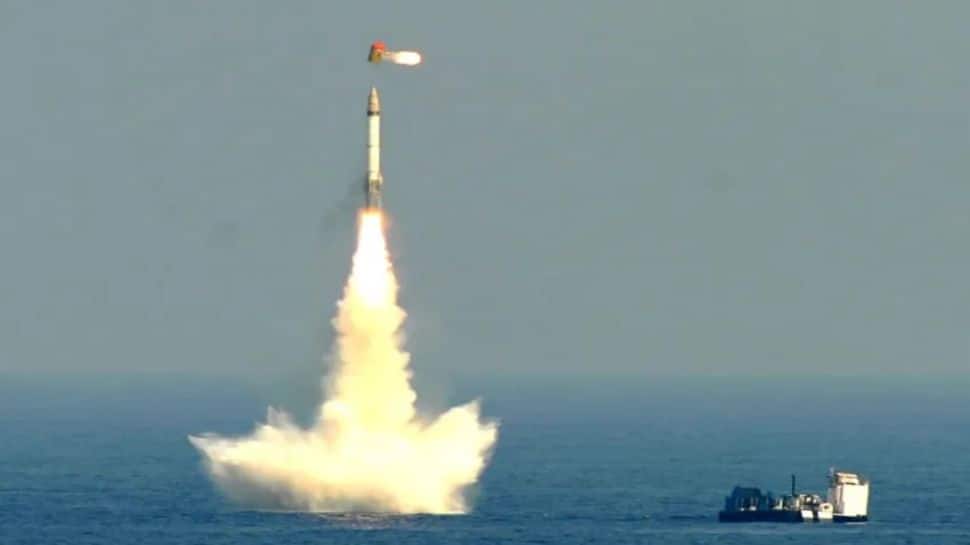
On December 23, 2025, India silently advanced its strategic defense capabilities with a successful test of the K-4 nuclear-capable ballistic missile in the Bay of Bengal. Launched from an Arihant-class submarine, this test marks a significant enhancement of India's sea-based nuclear deterrence, with the K-4 missile reportedly possessing a range of approximately 3,500 kilometers. The test underscores India's commitment to bolstering its defense posture amid ongoing regional security challenges.
The K-4 missile, designed to carry nuclear warheads, adds a crucial dimension to India's second-strike capability, a central component of its nuclear deterrence strategy. According to analysts, the successful test comes at a time when geopolitical tensions in the region necessitate enhanced military preparedness, particularly with respect to adversaries like Pakistan and China. The Bay of Bengal, chosen as the test site, offers a strategic location for underwater launches, reducing the risk of detection by opposing forces.
Military sources indicate that the K-4's operational range enables it to cover significant parts of Pakistan and northern China from Indian waters. This deployment is expected to act as a stabilizing factor in the complex security dynamics of South Asia. "The K-4 missile is not just a technological milestone; it's a clear message of deterrence," stated a defense analyst who chose to remain anonymous. With sophisticated guidance systems and increased accuracy, the K-4 stands as a formidable addition to India's defense arsenal.
Furthermore, the timing of this test aligns with the culmination of various strategic review processes undertaken by the Indian military. The successful launch demonstrates not only technological advancements but also India's growing prowess in submarine warfare capabilities. The Arihant-class submarines, on which the K-4 is deployed, are seen as vital assets, allowing India to operate stealthily beneath the waves while maintaining a credible nuclear deterrent.
On the international stage, the test of the K-4 may have broader implications for security alliances and diplomatic relations within the region. Countries monitoring India's military advancements will likely scrutinize the implications for regional stability and arms control discussions. Observers believe that this innovation could catalyze an arms race in South Asia, prompting neighboring countries to bolster their own defense measures.
As the dust settles on the test, the Indian government has refrained from issuing detailed commentary, consistent with its policy of strategic ambiguity regarding nuclear capabilities. However, the K-4 missile's successful launch solidifies India's position as a significant player in global strategic dynamics, reflecting a long-term commitment to uphold national security.
In conclusion, the recent test of the K-4 ballistic missile further cements India’s commitment to an effective sea-based nuclear deterrent. As regional tensions evolve, it remains to be seen how this strategic development will influence the balance of power in South Asia and beyond.