Hinjewadi Metro set for November 3 launch; PM to flag off virtually
Hinjewadi-Shivajinagar Metro Line 3 passenger services are scheduled to begin on November 3. Prime Minister Narendra Modi is expected to virtually flag off the commencement of the new metro service.
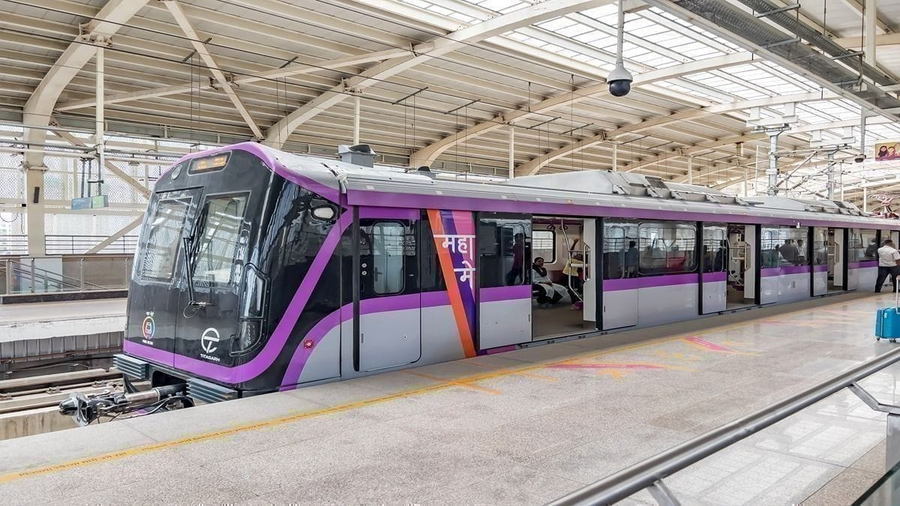
The Hinjewadi-Shivajinagar Metro Line 3 is set to commence passenger services on November 3, marking a significant milestone in Pune's urban infrastructure development. Prime Minister Narendra Modi is slated to virtually flag off the inauguration, underscoring the national importance placed on improving urban mobility in major Indian cities. This new metro corridor is designed to alleviate the severe traffic congestion that plagues the Hinjewadi IT hub and the adjacent Shivajinagar area, connecting major employment zones with key residential and commercial hubs across Pune.
The need for this dedicated mass transit solution has grown exponentially alongside the rapid growth of Pune as a technology and educational centre. Prior to this line's operational status, commuters in the Hinjewadi belt faced arduous daily commutes, heavily reliant on private vehicles and overloaded public transport, leading to significant time loss and environmental strain. The construction phase involved complex integration with existing urban layouts, requiring meticulous planning from the Pune Metro Rail Corporation Ltd.
This launch is not merely an operational upgrade; it represents a crucial step towards sustainable urban living in Pune. The metro is anticipated to reduce travel times substantially for thousands of daily commuters, thereby boosting productivity and improving the overall quality of life for the city's workforce. The successful commissioning of Line 3 aligns with broader national goals of enhancing public transport networks and reducing vehicular emissions in metropolitan areas.
The completion of this vital link solidifies Pune's commitment to modern, integrated urban planning, offering a reliable, high-capacity alternative to road transport. The November 3 launch is eagerly awaited by residents, IT professionals, and city planners alike, signaling a new era of connectivity for the region.
Also Read
Experts detail China's grey zone tactics along LAC for India's strategic response
Experts emphasize understanding China's grey-zone warfare tactics along the Line of Actual Control (LAC). This knowledge is crucial for effectively countering Beijing's strategic maneuvers in the border region.
The operationalization of the Hinjewadi-Shivajinagar Metro Line 3 marks a significant inflection point for Pune's urban infrastructure and mobility landscape. This connectivity directly addresses the chronic congestion plaguing the Hinjewadi IT corridor and the surrounding residential hubs. For thousands of daily commuters, particularly those employed in the technology sector, this line promises a substantial reduction in travel time and a shift away from private vehicle dependency, thereby easing pressure on arterial road networks like the Pune-Mumbai Highway access points.
The potential impact extends beyond mere commuting efficiency. Improved public transit accessibility can stimulate economic activity in adjacent commercial and residential areas, potentially altering real estate dynamics along the corridor. Furthermore, by offering a reliable, climate-controlled alternative to road travel, it contributes tangibly to Pune's sustainability goals by lowering vehicular emissions within the city limits. This integration into the existing metro network enhances the overall multimodal transport ecosystem of the city.
Looking ahead, the immediate focus will be on the smooth integration of Line 3 with existing metro stations and feeder services. Stakeholders, including Pune Metropolitan Region Development Authority (PMRDA) and local transport operators, must ensure seamless last-mile connectivity. Future developments to watch include the phased rollout of ancillary services, such as dedicated metro parking facilities and integrated ticketing systems across all lines. The sustained operational performance in the initial months will be a critical indicator of the project's long-term success in meeting commuter expectations and urban planning objectives.