From Tomorrow, Non-BS VI Cars from Outside Banned from Entering Delhi
Beginning Thursday, fuel pumps in Delhi will refuse service to vehicles lacking a valid Pollution Under Control Certificate (PUCC). This decision by the Sirsa administration aims to enhance air quality in the capital. The initiative is significant given Delhi's persistent air pollution issues, particularly during the winter months.
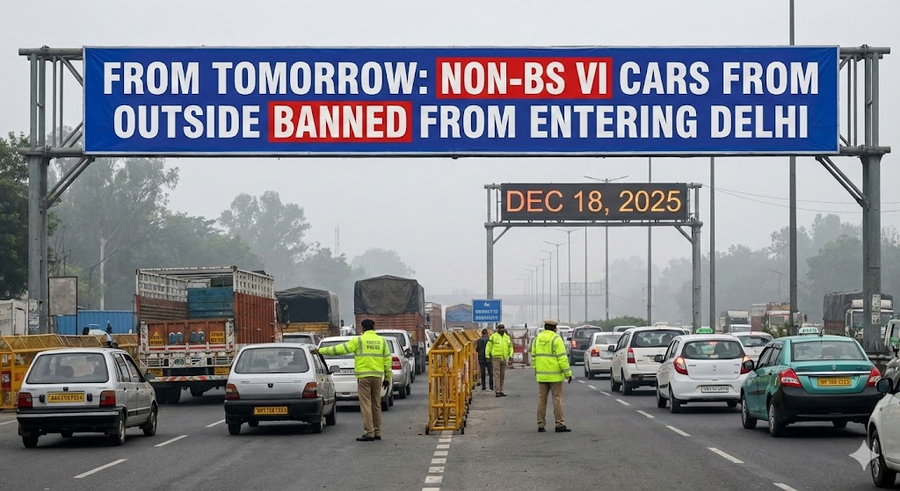
Beginning Thursday, vehicles that do not meet BS VI emission standards will be prohibited from entering Delhi, as the capital gears up to combat its ongoing air quality crisis. This decision comes as part of a broader initiative by the Sirsa administration to enforce stricter guidelines regarding vehicle emissions, especially during the critical winter months when air quality deteriorates significantly. Fuel pumps across the city will not provide services to vehicles lacking a valid Pollution Under Control Certificate (PUCC), aiming to curb vehicular pollution.
Delhi has long been grappling with hazardous air pollution levels, particularly during the winter, when the combination of stubble burning, industrial emissions, and vehicular pollution creates a toxic mix. The National Green Tribunal and various environmental advocacy groups have consistently ranked Delhi among the most polluted cities globally. Implementing the new restrictions is a response to public outcry for immediate action to improve air quality, especially as health concerns related to air pollution continue to rise. The introduction of stricter emission standards for vehicles entering the city is viewed as a critical step toward cleaner air.
Local residents have expressed mixed feelings about the new regulations. While many support the measures aimed at curtailing pollution, others worry about the practicality of enforcement and the potential inconvenience it may cause. Anand Sharma, a resident of East Delhi, expressed his concerns, stating, “While I believe we need cleaner air, I wonder how they will monitor this. What about those who really need to use their vehicles for work?” Such questions underline a broader anxiety amongst commuters and small business owners who depend on their vehicles for day-to-day operations.
The enforcement strategy involves heightened scrutiny at key entry points into the city. Authorities are ramping up inspections to ensure compliance with the PUCC certification. Non-BS VI vehicles, which include older models that emit higher levels of pollutants, may be turned away at check posts. This move is anticipated to lead to significant changes in commuter behaviour, with many opting for public transport or carpooling to avoid complications. The administration hopes that with fewer polluting vehicles on the roads, the overall air quality index will improve.
Experts suggest that while this initiative may contribute positively towards lower emissions, it is essential to combine it with other strategies, such as promoting electric vehicles and improving public transport infrastructure. The long-term success of this measure will depend on how well it is integrated into a comprehensive air quality management plan. Environmentalists note that merely restricting older vehicles is not a standalone solution but rather one component of a multifaceted approach needed to tackle the region's air pollution problem effectively.
As the capital embarks on this new chapter in its battle against pollution, the implications of these policies will resonate across various sectors. Residents, commuters, and businesses alike will have to adapt to the changing landscape of transportation in Delhi. With heightened awareness surrounding air quality, the hope remains that these measures will not only enhance public health but also spur a wider environmental consciousness among citizens.