American Tech Founders Drive Global Innovation and Market Trends
American tech founders, from Steve Jobs to Jensen Huang, continue to cultivate a strong, dedicated following. This enduring 'cult' reflects the significant cultural and commercial impact of visionary tech leaders globally.
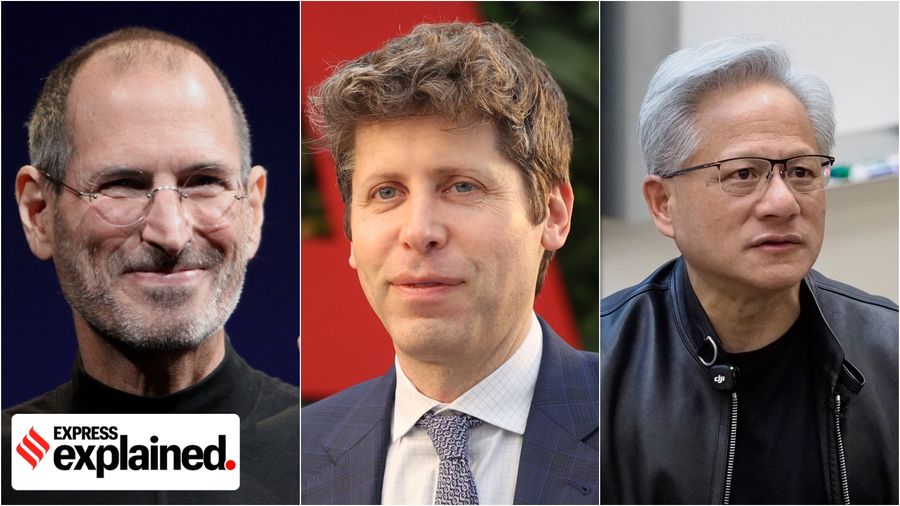
The enduring fascination with American tech founders, a phenomenon spanning from the revolutionary vision of Steve Jobs to the modern leadership of figures like Jensen Huang, reveals more than just successful business narratives; it speaks to a deep cultural resonance in the global technological landscape. Jobs, whose impact on personal computing and design redefined consumer electronics, established a benchmark for charismatic, transformative leadership within the Silicon Valley ethos. This archetype—the visionary who disrupts established norms—has since been replicated and adapted across various technological sectors.
Jensen Huang, CEO of NVIDIA, exemplifies this contemporary iteration. While his industry focus is distinct—high-performance computing, AI, and graphics processing—the narrative surrounding his company and his personal brand shares the DNA of early tech disruptors. His leadership has not only driven massive commercial success but has also shaped the trajectory of global AI development, moving beyond consumer gadgets into critical enterprise and scientific applications.
This sustained 'cult' is not merely about product sales; it is about the narrative of innovation itself. These leaders have managed to package complex technological advancements into accessible, aspirational stories. The impact extends far beyond quarterly earnings, influencing everything from global supply chains and labor markets to societal perceptions of what is technologically possible.
The background context shows a shift from personal computing revolutions to the pervasive integration of AI and data infrastructure. Whether through Apple’s design philosophy or NVIDIA’s computational power, these founders have not just created companies; they have helped define the infrastructure of the 21st-century economy, cementing their status as powerful, globally recognized cultural icons whose influence remains profoundly felt across industries worldwide.
Also Read

शरद पवार निवृत्ती चर्चावर फडणवीस यांची प्रतिक्रिया
शरद पवार १२ डिसेंबरला राजकारणातून निवृत्त होण्याची चर्चा आहे. यावर देवेंद्र फडणवीस यांनी आपली पहिली प्रतिक्रिया दिली आहे.
The sustained devotion surrounding figures like Steve Jobs and Jensen Huang transcends mere product success; it speaks to a deeper cultural narrative about disruptive innovation and entrepreneurial myth-making within the global technology landscape. This phenomenon is not solely about hardware or software, but about the perceived ability of these leaders to fundamentally reshape industries—from personal computing to artificial intelligence. Their influence extends beyond market capitalization, shaping consumer expectations regarding seamless integration, user experience, and technological possibility itself.
The possible impact of this concentrated leadership remains dual-edged. On one hand, it drives unprecedented investment and rapid technological advancement, accelerating global digital transformation. On the other, it creates high stakes around individual vision, where company trajectories become inextricably linked to the personal charisma and strategic direction of the founder. This concentration of power and influence raises ongoing questions regarding corporate governance, succession planning, and the long-term resilience of companies when their identity is so heavily tied to one individual's tenure.
Moving forward, the focus must shift from the singular founder narrative to institutional strength and diversified leadership. What to watch next is not simply the next product launch, but the evolution of corporate structures in these major tech entities—specifically, how effectively they transition visionary leadership into scalable, sustainable organizational frameworks. Furthermore, the increasing global diversification of tech power, with significant contributions from Asian and European innovators, will temper the historically American-centric narrative, offering a more nuanced view of modern technological ascendancy.