Delhi Police Deployed Outside Abhijeet Dipke's Residence Ahead of Lehra Do Tiranga March
In a dramatic turn of events, Abhijeet Dipke, founder of the CJP (Citizens for Justice and Peace), has found himself facing Delhi Police at his Jhandewalan residence. This development comes ahead of a scheduled protest march, the Lehra Do Tiranga Yatra, in central Delhi. The march aims to pressurize the
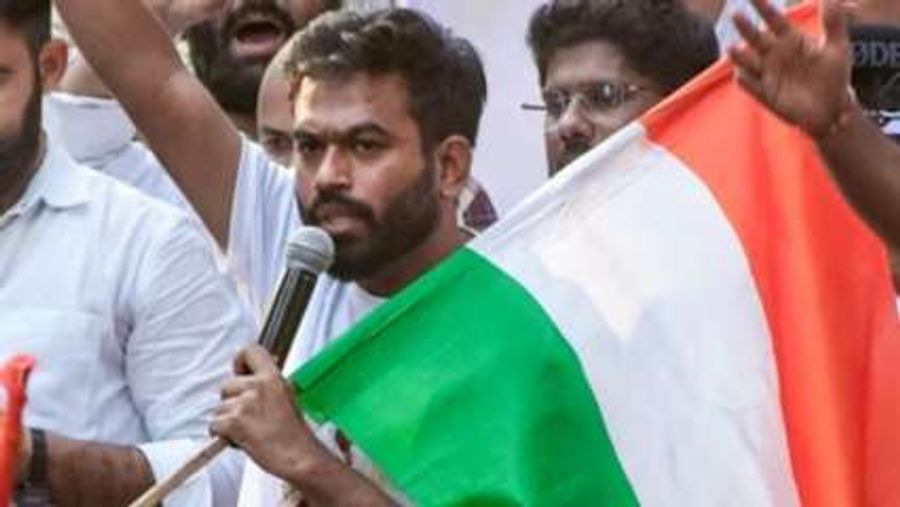
It was a chilly winter morning in the bustling city of Delhi when news broke that the police had cordoned off Abhijeet Dipke's residence in Jhandewalan. The usually quiet neighborhood was now abuzz with the hum of police jeeps, flashing lights, and the hushed whispers of passersby. Abhijeet Dipke, the firebrand founder of Citizens for Justice and Peace (CJP), had unwittingly found himself at the center of a brewing storm. The usually unflappable Dipke, known for his unwavering commitment to social justice, seemed taken aback by the sudden police presence outside his doorstep. As he emerged from his residence, a hint of curiosity danced in his eyes, but his usually sharp jawline betrayed a hint of concern. What could have prompted the police to descend upon his doorstep with such urgency?
As it turned out, the police had been tipped off about a scheduled protest march, the Lehra Do Tiranga Yatra, scheduled to take place in central Delhi. The march, a brainchild of Dipke and his team, aimed to pressurize the government to roll back its contentious Citizenship Amendment Act (CAA) and the National Register of Citizens (NRC). The CAA, passed in December 2019, had sparked widespread protests across the country, with many viewing it as a brazen attempt to marginalize the country's Muslim minority. The NRC, a proposed national register of citizens, had the potential to strip millions of Indians of their citizenship, plunging the country into a maelstrom of uncertainty. Dipke and his team had been at the forefront of the anti-CAA protests, using their formidable network of activists and supporters to mobilize the masses.
As the news of the police presence spread like wildfire, Dipke's team sprang into action. Social media was abuzz with frantic messages, as activists and supporters rallied around their leader. The hashtag #StandWithAbhijeet began trending on Twitter, as the public expressed their outrage at the police's heavy-handed tactics. Meanwhile, Dipke remained resolute, his determination to push forward with the march undiminished. "We will not be cowed by the police's intimidation tactics," he declared, his voice steady and firm. "We will continue to fight for the rights of the marginalized, even if it means facing the wrath of the state."
The police, however, seemed undeterred. A senior officer, speaking on condition of anonymity, revealed that the police had been monitoring Dipke's activities for weeks, tracking his every move. "We have reason to believe that the march could turn violent," the officer claimed, "and we cannot afford to take any chances." The officer's words seemed to echo the government's narrative, which had been peddling the notion that anti-CAA protests were nothing but a conspiracy hatched by "urban Naxals" and "anti-national elements." But Dipke and his team knew the truth – that their struggle was a legitimate expression of dissent, one that needed to be heard and respected.
As the sun began to set over the city, the police presence outside Dipke's residence remained unchanged. The air was thick with tension, as the public watched with bated breath. Would Dipke and his team manage to push through with the march, or would the police succeed in silencing them? Only time would tell, but one thing was certain – the fate of the Lehra Do Tiranga Yatra hung precariously in the balance.
As the night wore on, the streets around Dipke's residence remained eerily quiet. The police presence seemed to be a constant reminder of the state's determination to quash dissent. But Dipke's team remained undaunted, their resolve strengthened by the police's heavy-handed tactics. They knew that the battle ahead would be long and arduous, but they were ready to face it head-on. The stage was set for a dramatic showdown, one that would test the limits of the state's tolerance for dissent. The Lehra Do Tiranga Yatra had become a symbol of resistance, a beacon of hope for those fighting against the CAA and the NRC.
The next morning, the streets around Dipke's residence were bustling with activity. Activists and supporters had begun to gather, their faces set with determination. The police presence remained, but it seemed less intense, as if the authorities were waiting to see how the situation would unfold. Dipke, meanwhile, remained tight-lipped, his eyes fixed intently on the horizon. The fate of the Lehra Do Tiranga Yatra hung in the balance, as the city held its breath in anticipation of what was to come.
Also Read

ओएनजीसी के OPML में श्री शंकर शरन को प्रबंध निदेशक के रूप में नियुक्त किया गया
ओएनजीसी पेट्रोकेमिकल्स मार्केटिंग लिमिटेड (ओपीएमएल) ने श्री शंकर शरण को अपना मैनेजिंग डायरेक्टर नियुक्त किया है। उनके पास तीन दशक से अधिक का अनुभव है जो उन्हें अपने नए रोल में सफल होने में मदद करेगा। श्री शरण ने ओएनजीसी में अपने करियर की शुरुआत की थी और अब उन्हें
The Lehra Do Tiranga Yatra, as it turned out, was a carefully crafted strategy to push the government to roll back its contentious policies. The march, which began in the morning, saw thousands of protesters flooding the streets of central Delhi. The air was thick with the scent of protest, as activists and supporters chanted slogans, waved flags, and held up banners. The police presence was palpable, but it seemed to be largely symbolic, as if the authorities were waiting for something to go wrong.
As the march made its way through the city, Dipke remained at the forefront, his voice ringing out clear and loud. He was a natural leader, his words inspiring and motivating the crowds. The police, meanwhile, seemed to be struggling to keep up, their ranks thinning as the protesters surged forward. It was clear that the state was caught off guard, its heavy-handed tactics failing to quell the protesters' determination.
The Lehra Do Tiranga Yatra was more than just a protest march – it was a statement of defiance, a rejection of the state's attempts to stifle dissent. It was a testament to the power of collective action, as thousands of ordinary citizens came together to demand justice and equality. The march may have been a symbolic victory, but it was a crucial step forward in the fight against the CAA and the NRC.
As the sun began to set over the city, the protesters began to disperse, their spirits high. The police presence remained, but it seemed less intense, as if the authorities were beginning to realize the futility of their efforts. Dipke, meanwhile, remained at the forefront, his eyes fixed intently on the horizon. The Lehra Do Tiranga Yatra may have been a success, but the real battle was only just beginning.
The government's response to the Lehra Do Tiranga Yatra was predictable – it condemned the protest as "unlawful" and "violent." The police, meanwhile, seemed to be scrambling to justify their actions, claiming that the protesters had "hijacked" the march. But Dipke and his team knew the truth – that their struggle was a legitimate expression of dissent, one that needed to be heard and respected.
The Lehra Do Tiranga Yatra had sent a powerful message to the government – that the people would not be silenced, that their voices would be heard. The march may have been a small victory, but it was a crucial step forward in the fight against the CAA and the NRC. As Dipke and his team looked to the future, they knew that the battle ahead would be long and arduous, but they were ready to face it head-on.
The Lehra Do Tiranga Yatra had become a symbol of resistance, a beacon of hope for those fighting against the CAA and the NRC. It was a testament to the power of collective action, as thousands of ordinary citizens came together to demand justice and equality. The march may have been a small victory, but it was a crucial step forward in the fight for a more just and equitable society.
As the city returned to normal, Dipke and his team remained vigilant, knowing that the state would not give up easily. But they were undaunted, their resolve strengthened by the success of the Lehra Do Tiranga Yatra. They knew that the battle ahead would be long and arduous, but they were ready to face it head-on. The stage was set for a new chapter in the fight against the CAA and the NRC, one that would test the limits of the state's tolerance for dissent. The people had spoken, and their voices would not be silenced.