BJP Supports RSS Chief's 'Hindu Rashtra' Comments, Opposition Asserts Constitution Governs India
Rashtriya Swayamsevak Sangh (RSS) chief Mohan Bhagwat stated at a gathering on Sunday that India is a "Hindu nation" and emphasized that this identity does not require constitutional validation, labeling it as a "truth." His remarks have sparked discussions about the nature of India's identity and secularism. The statement comes
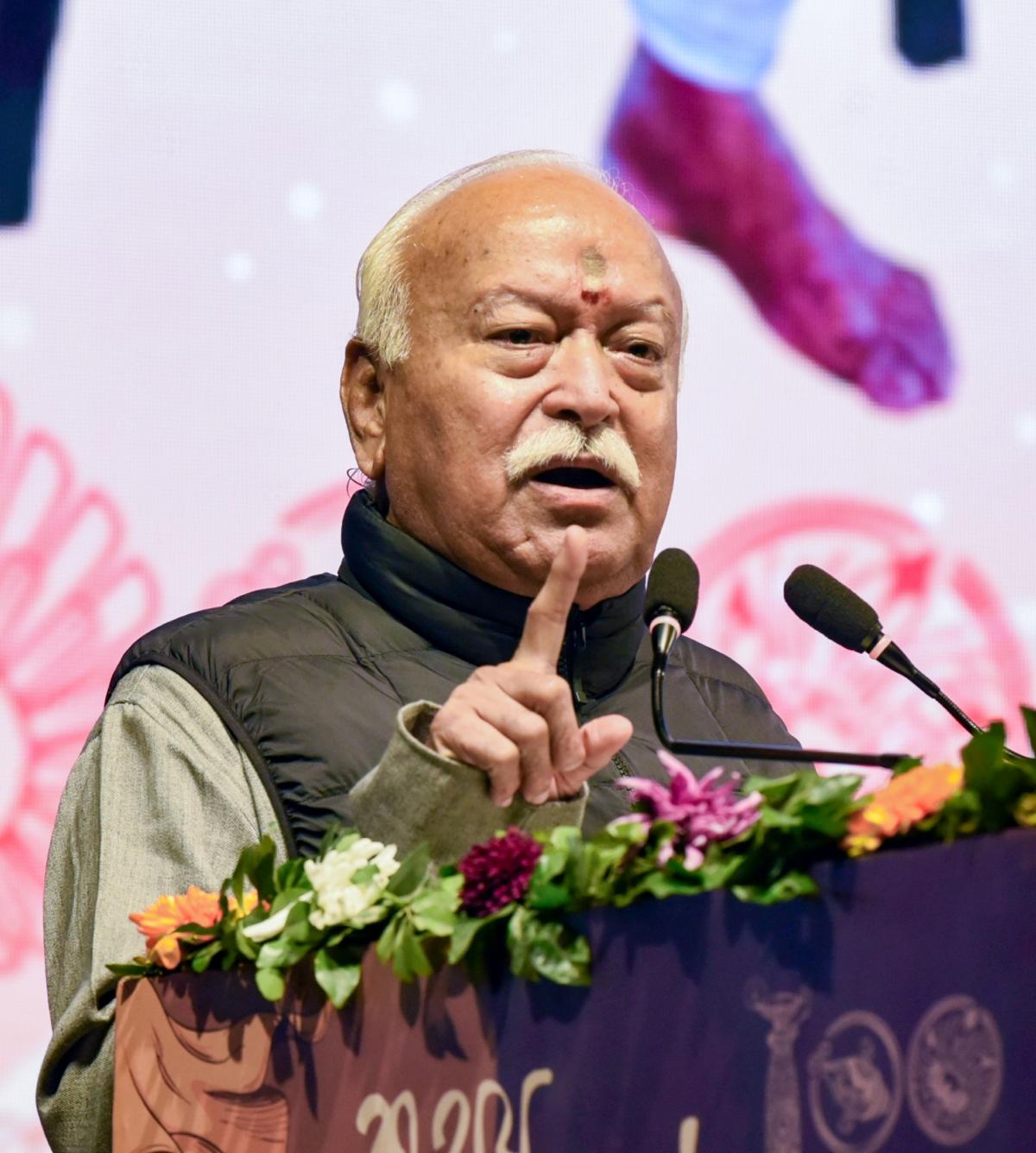
In a recent gathering in Nagpur, Rashtriya Swayamsevak Sangh (RSS) chief Mohan Bhagwat asserted that India is fundamentally a "Hindu nation," igniting a vigorous debate about national identity and the principle of secularism enshrined in the Indian Constitution. His comments, made on Sunday, suggest that this identity does not necessitate constitutional endorsement, which has been met with strong reactions from various opposition parties.
Bhagwat's declaration is seen as a reaffirmation of the long-standing belief held by some factions within the RSS and its allies in the Bharatiya Janata Party (BJP) that India's culture and ethos are rooted in Hinduism. During the address, he insisted that “this truth does not require validation from the Constitution,” a statement that has fueled discussions regarding the relationship between India's multi-religious identity and the vision of a nation predominantly defined by Hindu values.
In response to the remarks, leaders from the opposition have voiced their concerns, emphasizing the secular fabric of the country. They argue that the Constitution, rather than being a mere legal document, embodies the collective identity of all Indians, regardless of their religious affiliations. A prominent Congress party leader stated, “Every citizen's identity is protected under the Constitution. We must remember that India is a mosaic of cultures and religions, not solely a Hindu nation.”
Political analysts note that Bhagwat's pronouncements come at a time when the BJP is seeking to consolidate its support base in anticipation of upcoming elections. The party has a history of advocating for policies that resonate with Hindu nationalist sentiment. However, the criticisms from opposition leaders suggest that there is a significant segment of the Indian population that values the secular ethos, which has been a part of the country’s democratic process since its independence.
Bhagwat’s comments have also evoked reactions from various civil society groups, which argue that the RSS's vision undermines India's commitment to pluralism and tolerance. Many fear that endorsing the notion of India as a "Hindu nation" could marginalize minority communities, challenging the social cohesion that has been a hallmark of Indian society for decades. Activist and social commentator Amina Khan remarked, “Promoting a singular national identity risks alienating large sections of our population who have contributed to our rich heritage.”
As the dialogue surrounding Bhagwat's remarks continues, it underscores the complex interplay between religion and politics in India. The discussions reveal deeper ideological divides that have emerged in recent years, highlighting the differing views about what constitutes Indian identity in a rapidly changing socio-political landscape.
Ultimately, the statement from the RSS chief serves as a reminder of the ongoing challenge of balancing religious identities within the framework of a secular state. As the political climate grows more charged, both proponents and detractors of Bhagwat's assertions are mobilizing their narratives, setting the stage for a contentious debate that is sure to unfold leading up to the next general elections.