Foreign Investors Sell, Domestic Buyers Steady on Indian Markets
"Mumbai, September 6 - A mixed bag for Indian equities last week, as foreign institutional investors (FIIs) offloaded Rs 56.1 billion worth of shares, while domestic institutional investors (DIIs) snapped up Rs 231.6 billion. The benchmark indices extended their decline for the fourth week, weighed down by escalating geopolitical tensions

As the sun set over the financial hub of Mumbai, casting a golden glow over the towering skyscrapers of the city's business district, the Indian stock market was abuzz with activity. It was a typical Wednesday evening, with traders and investors huddled around screens, analyzing the latest market trends and making split-second decisions that could make or break their fortunes. But amidst the chaos, a peculiar phenomenon was unfolding. Foreign institutional investors (FIIs), the lifeblood of India's equity market, were quietly selling off their stakes, offloading a staggering Rs 56.1 billion worth of shares in a matter of days. The news sent shockwaves through the market, leaving many to wonder: what was driving this sudden exodus of foreign capital?
Behind the scenes, the story of FIIs' departure from Indian markets was one of complex geopolitics and economic calculations. For months, escalating tensions between the US and China had been casting a shadow over the global economy, with investors increasingly cautious about their exposure to emerging markets. India, with its vast and growing economy, had been seen as a safe haven for foreign capital, but the recent downturn in global markets had made even the most seasoned investors think twice. As a result, FIIs had begun to reassess their India exposure, and the consequences were being felt across the market.
One person who had been closely following the developments was Rohan Mehra, a seasoned portfolio manager with a leading investment bank. Mehra had seen it all before – the ebb and flow of foreign capital, the ebullience of bull markets, and the despair of bear markets. But this time, something felt different. The speed and scale of the FII sell-off were unprecedented, and Mehra couldn't help but wonder if it was a sign of things to come. "We're seeing a classic case of risk aversion," Mehra explained, his voice laced with concern. "FIIs are taking a step back, reassessing their exposure to emerging markets, and that's having a ripple effect on the Indian market."
As the FIIs continued to offload their stakes, the benchmark indices extended their decline for the fourth week, weighed down by escalating geopolitical tensions and a weak rupee. The mood on the street was somber, with many traders and investors feeling the pinch of the downturn. But amidst the gloom, there was a silver lining. Domestic institutional investors (DIIs), including mutual funds and insurance companies, were quietly buying up shares, snapping up Rs 231.6 billion worth of equities in a bid to stabilize the market. It was a testament to the resilience of Indian investors, who were refusing to give up on their country's growth story.
For Dhiren Shah, a Mumbai-based mutual fund manager, the FII sell-off was an opportunity in disguise. Shah had been watching the market for years, and he knew that in times of uncertainty, the best investments often lay in the unlikeliest of places. "We're seeing a classic case of fear-driven selling," Shah explained, his eyes shining with excitement. "FIIs are panicking, and that's creating opportunities for us to pick up quality stocks at attractive valuations." As the market continued to fluctuate, Shah was busy deploying his clients' money into some of India's most promising companies, hoping to ride out the downturn and emerge stronger on the other side.
But the FII sell-off was not just a story about market dynamics – it was also a tale of human drama, with thousands of people depending on the market's performance for their livelihoods. From the street vendors who sold tea and snacks to the traders and brokers who made their living on the trading floor, the market was a lifeline for many. And as the FIIs continued to exit, the uncertainty was palpable, with many wondering if the market would ever recover.
As the sun dipped below the horizon, casting the city in a warm orange glow, the Indian stock market remained a puzzle, with many pieces yet to fall into place. The FII sell-off was just the beginning of a much larger story, one that would play out over the coming weeks and months. But one thing was certain – the market would not be the same again.
Also Read
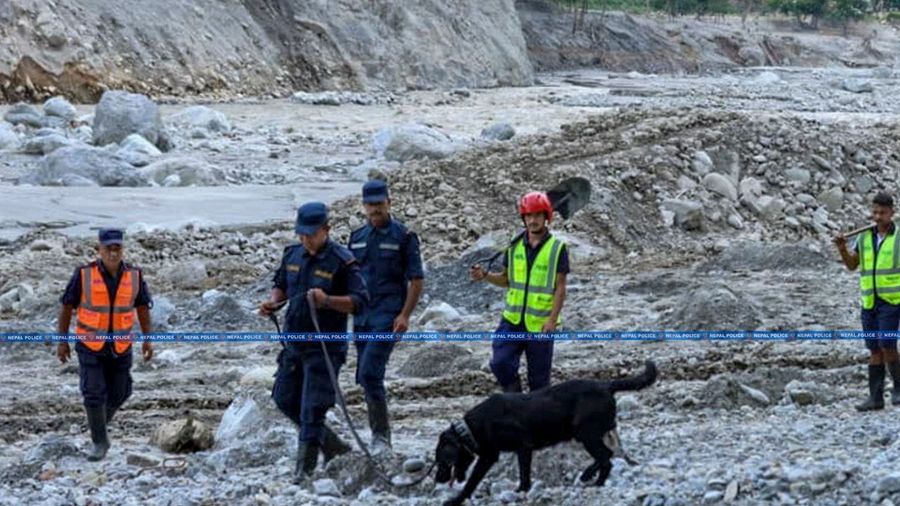
नेपाल में बाढ़ के बाद मृतकों की संख्या 1344 पहुंची, 5000 से अधिक लापता
नेपाल में भूस्खलन और बाढ़ की आपदा से अब तक 1344 लोगों की मौत हो गई है, जिनमें 589 विदेशी नागरिक भी शामिल हैं। 5000 लोग अभी भी लापता हैं, जिनमें से कुछ की जान बचाई जा सकती है। नुवाकोट जिले में एक आश्चर्यजनक बचाव अभियान में 60 वर्षीय एक
---
The FII sell-off had sent shockwaves through the market, but it was just the tip of the iceberg. As the news filtered down to the trading floor, a flurry of activity erupted, with traders and investors scrambling to make sense of the developments. But amidst the chaos, a more nuanced story was unfolding – one of complex geopolitics, economic calculations, and human drama.
One of the key players in the drama was the Reserve Bank of India (RBI), which had been watching the market developments with growing concern. The RBI had long been a vocal supporter of foreign capital, recognizing its importance in driving India's economic growth. But as the FII sell-off gathered pace, the RBI knew it had to act – and fast. In a bid to stabilize the market, the RBI launched a series of measures, including injecting liquidity into the system and cutting interest rates.
But the RBI's efforts were not without controversy. Some critics argued that the central bank was acting too quickly, trying to prop up a market that was fundamentally flawed. Others argued that the RBI was not doing enough, that it needed to take more drastic measures to stem the outflow of foreign capital. As the debate raged on, the market continued to fluctuate, with many wondering if the RBI's efforts would be enough to stabilize the situation.
As the days turned into weeks, the market continued to grapple with the fallout of the FII sell-off. The benchmark indices remained volatile, with the BSE Sensex oscillating wildly between gains and losses. But amidst the uncertainty, there were signs of resilience – the DIIs continued to buy up shares, and some of India's most promising companies began to show signs of recovery.
For Rohan Mehra, the portfolio manager, the FII sell-off had been a wake-up call. Mehra had seen it all before, but this time, he knew that the market was different. The speed and scale of the FII sell-off had caught even the most seasoned investors off guard, and Mehra knew that the market would never be the same again. "We're in a new era of market dynamics," Mehra explained, his voice laced with caution. "FIIs are taking a step back, and that's creating opportunities for us to pick up quality stocks at attractive valuations. But we need to be careful – the market is still volatile, and we don't know what the future holds."
As the market continued to navigate the choppy waters of global uncertainty, one thing was certain – the FII sell-off had been a turning point. The market would never be the same again, and India's growth story would have to adapt to a new reality. But amidst the uncertainty, there was also hope – the resilience of Indian investors, the resilience of Indian companies, and the resilience of the Indian economy itself. As the market continued to fluctuate, one thing was clear – the future would be bright, but it would also be uncertain.